
Walk into almost any doctor's office or outpatient clinic and the first clinical professional you meet is likely a medical assistant. They're the person who checks you in, takes your vitals, updates your chart and makes sure the provider has what they need — often all within the same few minutes.
If you're looking for a healthcare career you can start quickly, without years of school, medical assisting is one of the most practical paths available. Here's what the job actually involves.
Two sides of the job: front office and back office
Medical assistants are trained for both administrative and clinical work. That combination is exactly what makes them so valuable — one person who can keep the front desk moving and support patient care in the exam room.
Front-office (administrative) tasks
- Greeting and checking in patients
- Scheduling appointments and managing the day's flow
- Updating patient records and medical histories
- Handling phone calls, forms and insurance information
Back-office (clinical) tasks
- Taking vital signs like blood pressure, pulse and temperature
- Preparing patients and exam rooms for the provider
- Assisting physicians, nurse practitioners and physician assistants during exams
- Supporting clinical procedures under a licensed provider's supervision
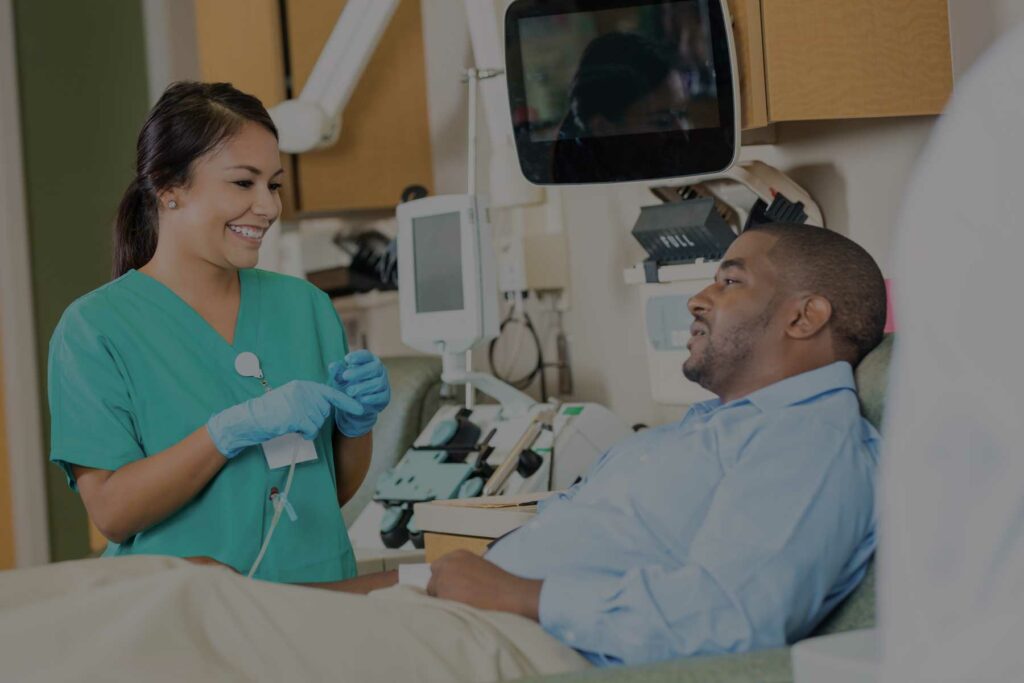
Where medical assistants work
Most medical assistants work in physicians' offices — according to the U.S. Bureau of Labor Statistics, offices of physicians employ 56 percent of all medical assistants. Others work in hospitals, outpatient clinics and other healthcare facilities. Because so many of these settings keep regular office hours, many medical assistants enjoy a predictable, full-time schedule.
Medical assistants care for patients across the lifespan — from newborn checkups to senior wellness visits.
What makes a great medical assistant?
The best medical assistants combine people skills with attention to detail. You'll want to be compassionate and calm with patients who may be nervous or unwell, organized enough to juggle a busy schedule, and confident with hands-on clinical skills. The good news: those skills can be learned — that's exactly what a quality training program is for.
How to become a medical assistant
Traditional medical assisting programs can take 10 to 14 months. At Providence Medical Academy in Douglasville, our accelerated program prepares you in 18 weeks: online coursework you complete on your own schedule, four in-person skills labs on evenings or weekends, and a two-week externship at a partner medical practice. When you finish, you're eligible to sit for the National Healthcareer Association (NHA) Certified Clinical Medical Assistant (CCMA) exam — and you can take it right here on campus.
Is it a good career choice?
The BLS projects employment of medical assistants to grow 13 percent from 2025 to 2035 — much faster than the average for all occupations — with about 109,700 openings each year. The median annual pay was $45,690 in May 2025.
Ready to start?
If you're 18 or older with a high school diploma or GED, you could be working as a medical assistant in a matter of months. Classes start monthly — apply today or contact our admissions team with your questions.
Source: U.S. Bureau of Labor Statistics, Occupational Outlook Handbook: Medical Assistants.